Main Features
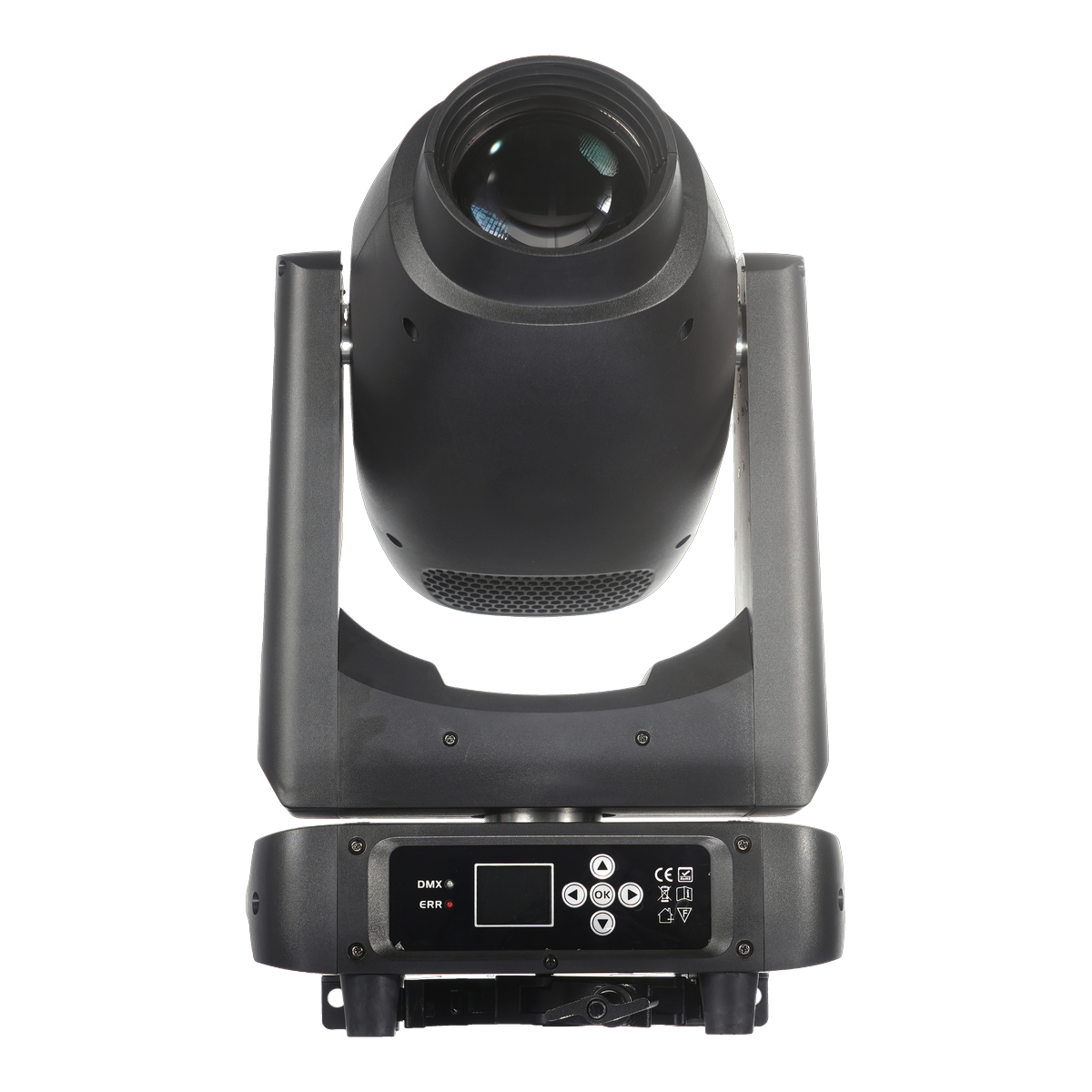
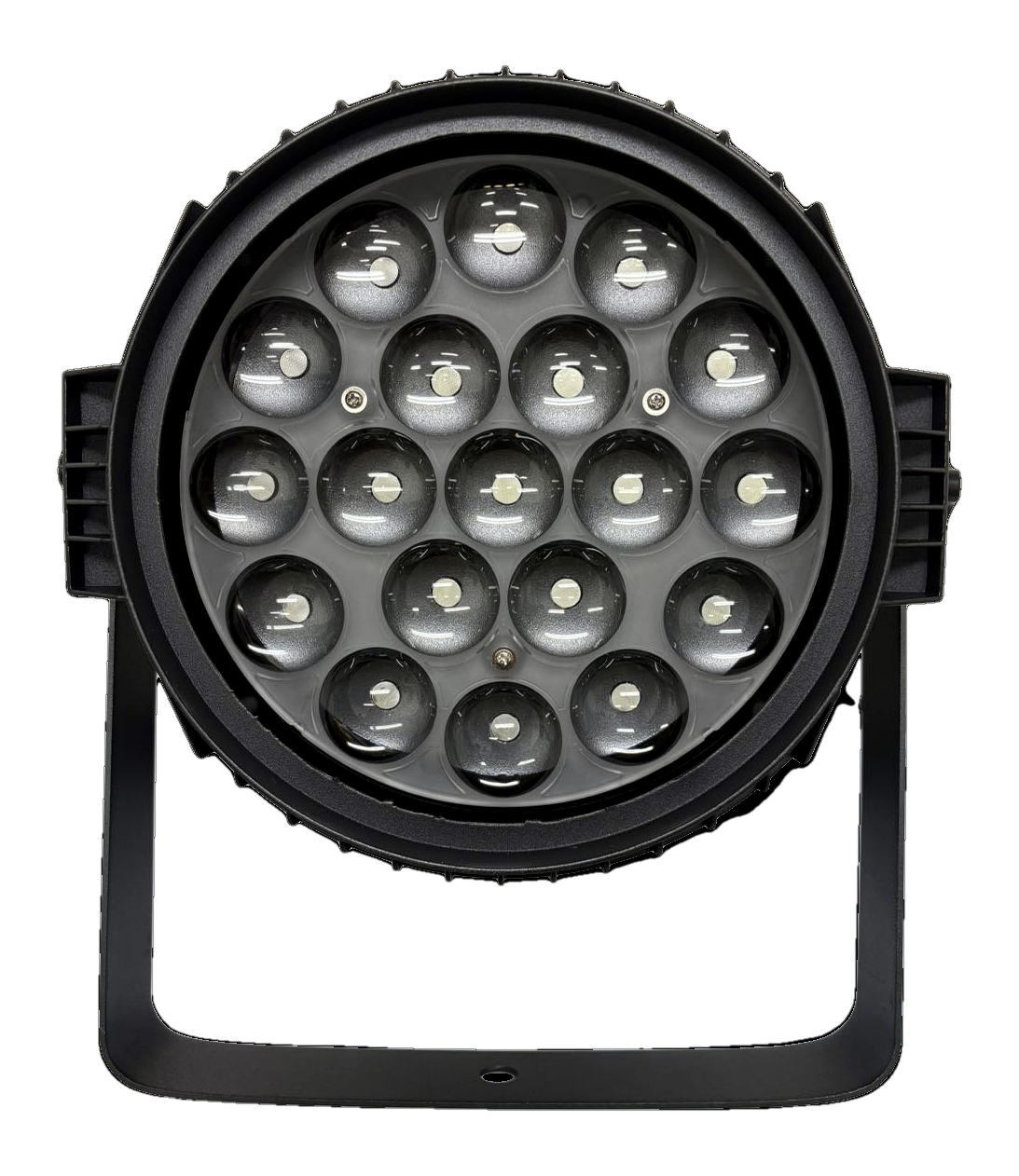
A 120W white LED spot with a 29pcs RGB halo ring, a 6+12 double-layer prism and 22CH of DMX under a 6.75 kg body — hard-edged spot duty and color glow from one fixture small enough for a one-person load-in.
A 120W White Engine, Not an RGB Mix
The SPOTTY LED 150 runs a single 120W white LED at 7500K behind an 8°–14° beam angle. That is the reason its output punches: white emitters are more efficient than mixing white out of red, green and blue diodes, so you get more usable light from a 150W draw. On a small stage, a bar floor or a booth, the spot still cuts through ambient light and reads clearly from the back of the room. The color wheel does the color work instead, with 7 colors plus open and a rainbow effect.
The 29pcs RGB Halo Ring
A ring of 29 RGB LEDs surrounds the main lens and runs on its own channels. That means the halo can sit on a deep blue or a slow color chase while the white spot stays clean and focused on the performer, or the two can move together for a single saturated look. It is the difference between a fixture that lights someone up and a fixture that gives the room a mood at the same time — useful when you are running two lights and need them to look like four.
6+12 Double-Layer Prism for Instant Texture
The prism holds a 6-facet and a 12-facet layer, and both rotate. Flipping the prism turns one hard beam into a fan of beams that spreads across a room — the fastest way to fill a chorus or make a drop land without touching a gobo wheel. Combined with the 7-gobo static wheel and the rainbow effect, you have three independent ways to change the look mid-song from the console.
22CH of DMX and 540° Pan / 270° Tilt
22 DMX channels cover pan, tilt, color, gobo, prism, dimmer, strobe and the halo ring separately, so nothing is locked to anything else while you are programming. Pan travels 540° and tilt 270°, both with 8-bit or 16-bit scanning selectable. 16-bit is the mode for smooth movement on slow sweeps; 8-bit keeps the channel count down when the console is already busy. DMX, Master-Slave, Auto and Sound modes are all built in.
Strobe From 0.3Hz, Dimming Fully Linear
The strobe range starts at 0.3Hz — a slow, deliberate pulse rather than the usual fast-only flash — and runs to 25Hz for a hard strobe on the peak. Linear 0–100% dimming means a fade on the desk is a fade in the room, with no visible stepping as the level comes down. Together they cover the slow build and the hit, which is what a DJ set actually asks for.
6.75 kg and a 420 mm Footprint
At 6.75 kg (14.9 lb) in a 420 × 305 × 300 mm (16.5 × 12.0 × 11.8 in) body, the SPOTTY LED 150 hangs from a T-bar, a light stand or a low truss without a second pair of hands and without a lift. Power runs on PowerCon input/output and DMX on 3-pin XLR input/output, so a pair chains together on one power run and a short DMX run — a real difference when you are setting up and striking the same rig every weekend.
WHO IT’S BUILT FOR
Mobile DJs and solo operators
Two of these over a dance floor give you a moving spot on each side, and the 29pcs RGB halo rings fill the space between them with color. At 6.75 kg (14.9 lb) each, one person carries, mounts and addresses the pair; PowerCon in/out means one power run feeds both. Auto and Sound modes cover the nights when you are mixing and cannot drive a console, and DMX is there when you can.
Bars, clubs and small venues
A 120W white spot at 7500K cuts through the ambient light of a working bar, and the 6+12 prism spreads it wide enough to cover a floor when the room fills up. Mount them on the ceiling or a wall bracket and run the halo rings as a slow color bed all night, then open the strobe and the rainbow effect when the room peaks. Master-Slave lets a resident operator run a matched pair with no programming.
Bands and small touring rigs
22CH per fixture is enough to keep color, gobo, prism and halo on separate faders, which matters when the set list is long and you are busking. 8-bit or 16-bit scanning lets you trade channel count for movement quality show by show. The fixture holds up to weekend load-ins, and the 50,000-hour LED rating means the engine outlasts the touring cycle.
Churches, schools and multi-purpose rooms
One fixture can be a clean white key light on the speaker with the halo off, then switch to color and prism for a youth event or a service opener. Auto and Sound modes let a volunteer run it without training, and the LCD display with 5 buttons makes addressing straightforward. The 2-year warranty and 30-day return policy make it an easy first purchase for a room that is buying its first moving head.
Indoor use only
The SPOTTY LED 150 carries an IP20 rating and is built for clubs, bars, churches, schools and other covered indoor rooms. It is not weather-sealed, so for outdoor or weather-exposed events choose an IP65-rated fixture from our outdoor range instead.
Where It Fits
Moving heads suit rigs that move with the show: clubs and small venues, touring and rental racks, band and theatre stages, corporate events and houses of worship.
FREQUENTLY ASKED QUESTIONS
What makes the SPOTTY LED 150 different from a budget LED moving head?
The light engine and the halo ring. It runs one 120W white LED at 7500K with an 8°–14° beam rather than mixing white out of separate RGB diodes, so you get more usable output from a 150W draw and a cleaner spot. Around that sits a 29pcs RGB halo ring on its own channels, plus a 6+12 double-layer prism and a 7-color wheel with rainbow — three independent ways to change the look from 22CH of DMX.
How many SPOTTY LED 150 fixtures do I need?
Two is the practical starting point: one on each side of a dance floor or stage gives you moving spots on both sides with halo color filling the middle. The 1 PC package is $519, so a matched pair covers a small room properly. A single unit works as a key light over a speaker or a booth, and for a wider floor or a stage front, four spread across the ceiling gives you real coverage.
Do I need a DMX controller to run it?
No. DMX, Master-Slave, Auto and Sound modes are all built in, so you can power it up, pick a mode on the LCD display and run. Adding a console unlocks the parts that make the fixture worth its 22 channels: 540° pan and 270° tilt movement, the gobo and color wheels, the 6+12 prism and independent control of the 29pcs RGB halo ring.
What does the 6+12 double-layer prism actually do?
It splits one beam into a fan of beams. The prism carries both a 6-facet and a 12-facet layer and rotates, so at one setting you get six widely spaced beams and at the other twelve tighter ones — or the rotation makes them sweep. It is the fastest way to go from a single hard spot to a wall of beams across a chorus or a drop, without changing gobos or colors mid-song.
Can I use it outdoors?
No. The SPOTTY LED 150 is IP20-rated for indoor use — clubs, bars, churches, halls and other covered rooms. It is not weather-sealed, so for outdoor or weather-exposed events choose an IP65-rated fixture from our outdoor range instead.
How is it powered, and what does it ship with?
Power is AC100–240V at 50/60Hz with a 150W draw and a 5A fuse, so the same unit works on US and EU mains. Power uses PowerCon input/output and DMX uses 3-pin XLR input/output, both of which let you chain fixtures on one run. Every order includes free shipping on most products across the USA, a 2-year warranty and a 30-day return policy.
Will it hold up to regular weekend use?
The main LED and the halo ring are rated for 50,000 hours, which is the specification that matters for a fixture that works every weekend. A 0.3–25Hz strobe range and 0–100% linear dimming mean the dimmer channel is doing the work rather than the LED being switched on and off, and the 2-year warranty backs the fixture itself.











Reviews