


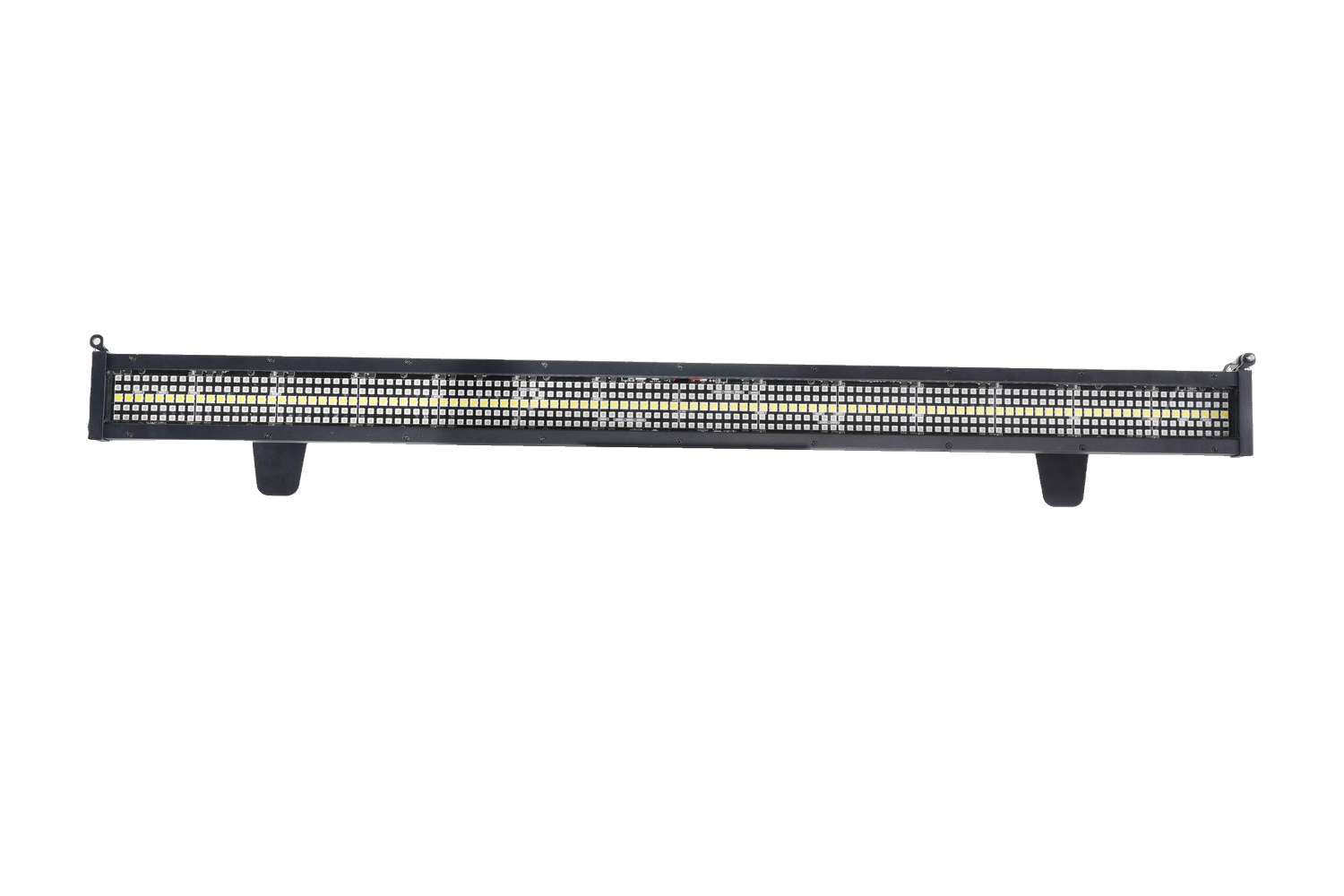
3200K + 6500K Dual white LED blinder with 72 RGB halo LEDs, a 45° face, 16 macro effects and 10 / 26CH of DMX. The SOLSTICE DUO 616C is a popular choice for clubs, theatre stages and touring rigs.
From $120.00
| ✔ |
Warm And Cool On Board3200K + 6500K
One fixture serves tungsten looks and daylight looks without a gel change
|
| ✔ |
Each Emitter Dimmed Separately2 × 100W
Blend the two whites yourself, or slam one at a time for a hard blinder hit
|
| ✔ |
Inner And Outer RGB Halo Rings72 × 0.2W
A color layer around the blind, so it is a design element and not just a flood
|
| ✔ |
45° Blinder Spread16 Macro Effects
Wide enough to wash a crowd from the truss, with looks already built in
|
| ✔ |
2.8 kg, Four To A Box$120 Each
Light enough to bank in fours, and priced to buy a set rather than a pair
|
Shop by use case: Club & Bar · Mobile DJ · Special Event


From $120.00
The blinder carries two 100W white LEDs: one at 3200K for the warm, tungsten-style look and one at 6500K for cool daylight. That is the whole argument for this fixture. A venue that needs a warm wash for a service or a theatre piece and a cool look for a modern stage normally needs two sets of lights or a gel change between them. Here both temperatures are on the same fixture and switch instantly, which halves the inventory for any room that programs more than one kind of event.
The two white LEDs are dimmed separately, and that is more useful than it first sounds. Run only the 3200K for a candlelit feel, only the 6500K for a crisp modern look, or both together for a neutral white somewhere in the middle — and because the levels are independent rather than a single dimmer, you can ride a warm-to-cool transition live during a song or a scene. On stage the color temperature becomes another fader instead of a decision made before the show.
Two concentric RGB rings sit around the blinder face and hold 16 built-in macro effects between them. That gives the fixture a second job alongside the white blinder: color chases running around the outside of the beam, patterned movement that reads across a stage, or a slow saturated bed behind the run of white light. For a DJ set or a concert closer, the rings are what turn a white blinder into a moving element the crowd can watch.
A 45° beam angle is deliberately wide. A blinder's job is to hit a whole stage, a band or a congregation with one broad wash rather than picking out individuals, and 45° does that from a single position. On top of the white and the halo rings, the fixture carries built-in programs and strobe effects with adjustable speed, so there are looks available straight from the menu without programming anything.
The strobe runs 1–25Hz, and the slow end matters as much as the fast end: a 1Hz pulse can sit under a ballad or a quiet passage, while 25Hz is the hard strobe for a drop. Two DMX personalities cover the fixture, 10CH for a fast patch and 26CH when you want the halo rings, programs and strobe broken out onto separate channels. DMX, Master-Slave, Auto and Sound modes are all built in, and PowerCon in/out and 3-pin XLR in/out let a row chain together.
At 2.8 kg (6.2 lb) in a 363 × 126.7 × 240.5 mm (14.3 × 5.0 × 9.5 in) body, the fixture is light enough that one person can mount a bar of four without a lift, and the narrow profile suits a low ceiling or a wall position. The 1 PC price is $120, and the BOX OF 4PCS at $476 costs less than four singles — four being the number that gives a stage front proper blinder coverage rather than one bright patch in the middle.
Moving heads suit rigs that move with the show: clubs and small venues, touring and rental racks, band and theatre stages, corporate events and houses of worship.






The blinder carries two 100W white LEDs: one at 3200K for the warm, tungsten-style look and one at 6500K for cool daylight. That is the whole argument for this fixture. A venue that needs a warm wash for a service or a theatre piece and a cool look for a modern stage normally needs two sets of lights or a gel change between them. Here both temperatures are on the same fixture and switch instantly, which halves the inventory for any room that programs more than one kind of event.
The two white LEDs are dimmed separately, and that is more useful than it first sounds. Run only the 3200K for a candlelit feel, only the 6500K for a crisp modern look, or both together for a neutral white somewhere in the middle — and because the levels are independent rather than a single dimmer, you can ride a warm-to-cool transition live during a song or a scene. On stage the color temperature becomes another fader instead of a decision made before the show.
Two concentric RGB rings sit around the blinder face and hold 16 built-in macro effects between them. That gives the fixture a second job alongside the white blinder: color chases running around the outside of the beam, patterned movement that reads across a stage, or a slow saturated bed behind the run of white light. For a DJ set or a concert closer, the rings are what turn a white blinder into a moving element the crowd can watch.
A 45° beam angle is deliberately wide. A blinder's job is to hit a whole stage, a band or a congregation with one broad wash rather than picking out individuals, and 45° does that from a single position. On top of the white and the halo rings, the fixture carries built-in programs and strobe effects with adjustable speed, so there are looks available straight from the menu without programming anything.
The strobe runs 1–25Hz, and the slow end matters as much as the fast end: a 1Hz pulse can sit under a ballad or a quiet passage, while 25Hz is the hard strobe for a drop. Two DMX personalities cover the fixture, 10CH for a fast patch and 26CH when you want the halo rings, programs and strobe broken out onto separate channels. DMX, Master-Slave, Auto and Sound modes are all built in, and PowerCon in/out and 3-pin XLR in/out let a row chain together.
At 2.8 kg (6.2 lb) in a 363 × 126.7 × 240.5 mm (14.3 × 5.0 × 9.5 in) body, the fixture is light enough that one person can mount a bar of four without a lift, and the narrow profile suits a low ceiling or a wall position. The 1 PC price is $120, and the BOX OF 4PCS at $476 costs less than four singles — four being the number that gives a stage front proper blinder coverage rather than one bright patch in the middle.
Moving heads suit rigs that move with the show: clubs and small venues, touring and rental racks, band and theatre stages, corporate events and houses of worship.
| Input power | AC 100–240V |
| Power frequency | 50/60Hz |
| Power consumption | 180W |
| Voltage range | Universal — works on US and EU mains |
| Main | 2 × 100W dual white LED |
| Halo ring | 72pcs 0.2W RGB 3-in-1 LED |
| Average lifespan | 50,000 hours |
| White | 3200K warm white + 6500K cool white, independently dimmed |
| Halo rings | RGB for inner and outer halo rings |
| Linear dimming | 0–100% linear dimmer |
| Strobe | 1–25Hz |
| Beam angle | 45° |
| Built-in programs | Built-in programs and strobe effects with adjustable speed |
| Halo rings | Inner and outer RGB halo ring designed with 16 macro effects |
| Protocol | DMX512 |
| DMX channels | 10CH / 26CH (switchable) |
| DMX connector | 3-pin XLR input/output |
| Power connector | PowerCon input/output |
| Control modes | DMX / Master-Slave / Auto / Sound |
| IP rating | IP20 — indoor use only |
| Housing color | Black |
| Working ambient temp. | −10°C to 40°C (−14°F to 104°F) |
| Dimensions | 363 × 126.7 × 240.5 mm (14.3 × 5.0 × 9.5 in) |
| Weight | 2.8 kg (6.2 lb) |


Join the list for new product drops, demo videos and stage-lighting tips. One email a week — unsubscribe anytime.
Enter it at checkout for 5% off your first order.
Reviews