Main Features
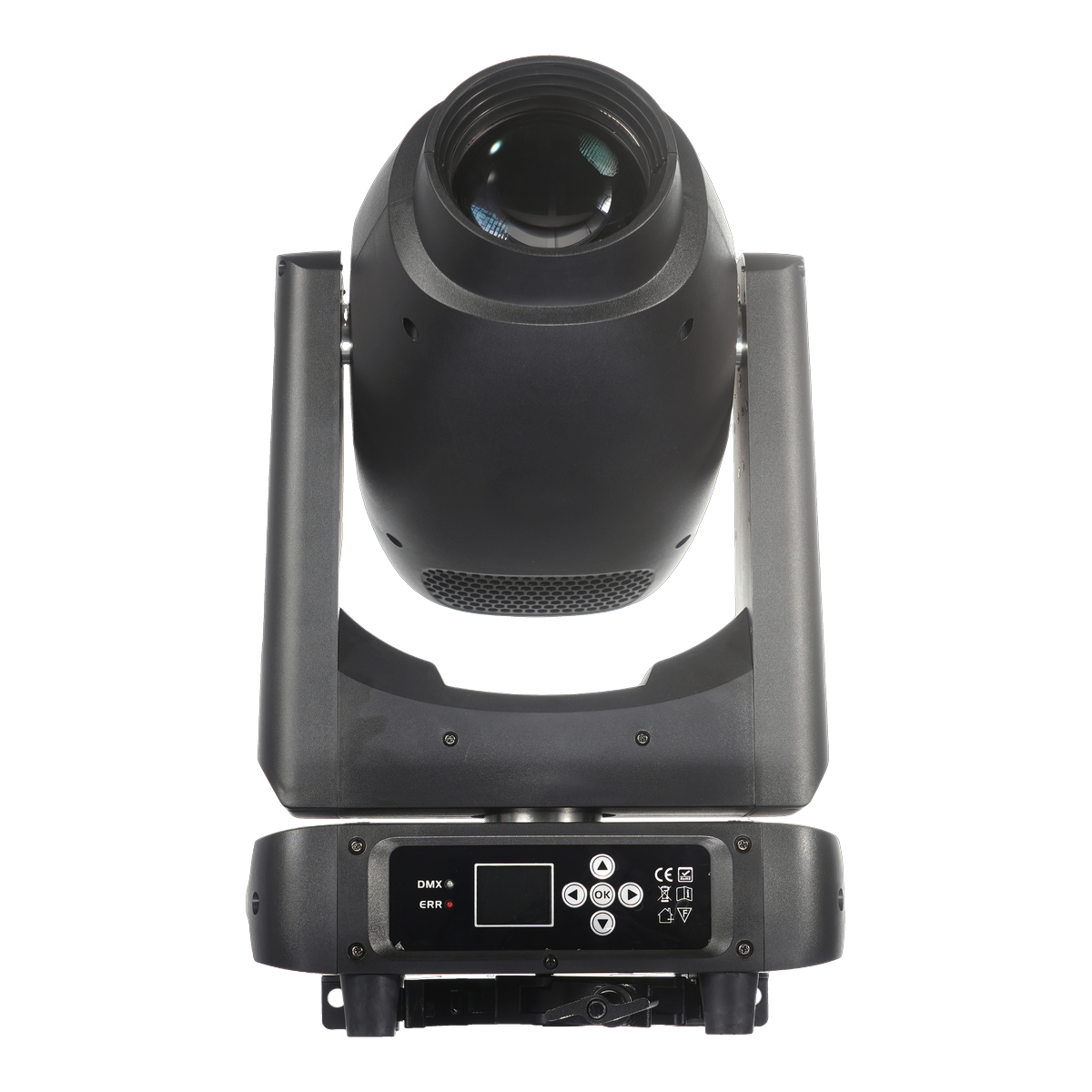
A 90W beam head with a 1.5° beam, dual 16-facet and 6-facet rotating prisms, 7 gobos, 7 colors, a 12-LED RGB halo ring and 16-bit pan and tilt — aerial effects at $215 a fixture.
A 1.5° Beam Is The Whole Point
The L90 projects a 1.5° beam, which is genuinely narrow. That narrowness is what makes haze, fog and stage smoke visible as solid shafts of light rather than a soft glow, and it is why beam heads look so different from wash lights in the same rig. Point two or four of them across a room and the air becomes part of the set instead of empty space above the audience.
Two Rotating Prisms In One Head
A 16-facet rotating prism and a separate 6-facet prism both live inside the fixture. The 16-facet splits the beam into a fine fan of light for dense aerial texture; the 6-facet gives a wider, more open spread of discrete beams. Because they are separate, you get two distinctly different effects from one fixture rather than choosing a single prism at purchase and living with it.
7 Gobos And 7 Colors On Wheels
The gobo wheel carries seven gobos plus open, and the color wheel carries seven colors plus open. That combination keeps beam effects changing through a set — a patterned beam early, a clean white throw for the drop, a colored fan for the encore. Because the wheels hold real gobos and real color, you are not limited to whatever a color-mixing engine happens to produce.
A Halo Ring That Adds Depth
Twelve RGB LEDs form a ring around the main beam and run on their own color control. You can hold the beam in pure white with a slow color drift around it, or match the ring to the beam for a solid mass of color. It reads as depth on stage: the eye sees a bright source with a colored aura, which looks considerably more expensive than a flat white circle.
16-Bit Pan And Tilt, 14 Channels
Movement covers 540° pan and 270° tilt at 16-bit resolution, which means the fixture glides to a position and follows a performer instead of stepping between locations. Everything runs over 14 DMX channels, so a short patch leaves the rest of the console free for the rest of the rig. A 0–100% linear dimmer and a 1–25Hz strobe cover both the slow fade and the hard hit.
DMX, Auto, Sound And Master-Slave
Four control modes are built in. DMX when a designer is on the desk, Master-Slave when you want several heads doing the same thing, Auto for a set-and-forget look, and Sound-Active when nobody is driving and the fixture should react to the music itself. That range is why the L90 works as convincingly in a bar as it does on a concert stage.
4.2 kg, IEC Power, Ready To Hang
At 210 × 170 × 340 mm and 4.2 kg (9.3 lb), one person can hang it from standard truss or a lighting stand with no special hardware. Power is a standard IEC input and DMX runs on 3-pin XLR in and out, so cabling is what you already own. The LED is rated for 50,000 hours, and every order carries free USA shipping on most products, a 2-year warranty and a 30-day return policy.
WHO IT’S BUILT FOR
Clubs and nightclubs
A 1.5° beam through a hazy room is the classic club look, and the dual prisms keep it from becoming repetitive over a long night. Two to four heads on the ceiling with 16-bit movement sweeping the crowd covers the room, and the halo ring keeps color running underneath the beam effects.
Mobile DJs and party rigs
At 4.2 kg it goes up on a stand or a small truss without a second person, and Sound and Auto modes let it run the show while you work the booth. The BOX OF 4PCS at $856 gives you four heads and a proper beam rig from one purchase.
Live bands and touring shows
14 channels per head leaves console room for the wash and key fixtures, and the dual prisms give the lighting op two distinct aerial effects to swap between songs. IEC power and 3-pin XLR mean the L90 drops into an existing touring cable set with nothing new to buy.
Theatres, event halls and rental stock
The 7 gobos and 7 colors make it useful for defined looks and projections, not just club-style beams, and the 4-button LED display makes re-addressing fast for whoever collects the units. One SKU covering pattern, color, prism and halo keeps the rental shelf lean.
Indoor use only
The JUBARIS BEAM L90 carries an IP20 rating and is built for stages, clubs and indoor venues. For outdoor or weather-exposed events, choose an IP65-rated fixture from our outdoor range instead.
Where It Fits
Moving heads suit rigs that move with the show: clubs and small venues, touring and rental racks, band and theatre stages, corporate events and houses of worship.
FREQUENTLY ASKED QUESTIONS
What makes the JUBARIS BEAM L90 different from a standard beam light?
Two rotating prisms instead of one, and a separate color layer around the beam. The 16-facet and 6-facet prisms are independent fixtures inside the same head, so you get a fine dense fan and a wider open spread without buying two units. Add the 12-LED RGB halo ring and the 1.5° beam, and you have a fixture that covers pattern, color and ambient effect together.
How many JUBARIS BEAM L90 lights do I need?
Two heads give you a left-right pair for a small stage or a dance floor at $215 each. Four is the standard beam rig for a club or a band stage front, which is exactly what the BOX OF 4PCS at $856 provides — four fixtures, in one delivery.
Do I need a DMX controller to run it?
No. DMX, Master-Slave, Auto and Sound-Active modes are all built in, so the head runs a usable show on its own or slaved to another fixture. Connect a controller when you want the gobo wheel, color wheel, both prisms and the halo ring all under your fingers on the 14-channel map.
What is the halo ring actually for?
It is a ring of 12 RGB LEDs around the main beam with its own color control. That gives you a color accent behind a white beam, a slow color drift that moves independently of the beam, or a match to the beam for a solid block of color. It is what gives the fixture depth on stage rather than a flat white dot.
Can I use it outdoors?
No. The JUBARIS BEAM L90 is IP20-rated for indoor use — clubs, stages, theatres and covered venues. For outdoor or weather-exposed events, choose an IP65-rated fixture from our outdoor range instead.
How is it powered and connected?
It runs on AC 100–240V, 50/60Hz with a 150W power consumption and a 5A fuse, so it works on US and European mains. Power is a standard IEC input and DMX is 3-pin XLR in and out, which means no special cable purchases to add the fixture to a rig.
Will it hold up to regular touring?
Yes. The 90W LED is rated for 50,000 hours, so a weekend schedule uses a small fraction of its life, and at 4.2 kg (9.3 lb) the housing is easy to handle on load-in. Every order includes free USA shipping on most products, a 2-year warranty and a 30-day return policy.









Reviews