Main Features
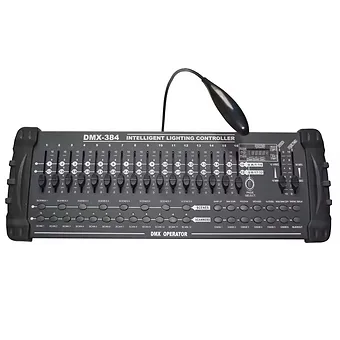
384 channels over 12 intelligent lights, 240 scenes in 30 banks and 6 chase banks on a 16-fader desk — the whole rig on one controller, with or without an operator.
384 Channels Across 12 Intelligent Lights
Each of the 12 fixture positions can carry up to 32 DMX channels, so a rig of moving heads, washes and effect lights all lives on one desk. That is 384 channels of control from a single console — enough for a four-piece band with a backline of lights, or a DJ booth running pars, derbies and strobes together. Patch each fixture once, save it, and stop swapping between two desks in the dark.
240 Scenes in 30 Banks
Thirty banks of eight scenes give you 240 static looks to build before the doors open. Store one for the walk-in, one for each song, one for the toasts and one for the last dance, then step through them in order without touching a fader. It is the difference between running a show and improvising one — and for wedding and church work, where the same set list repeats every weekend, that library earns its keep in the first month.
6 Chase Banks, Up to 240 Steps Each
Chases are where the movement comes from. The C384 holds 6 chase banks and each one runs up to 240 steps, so you can build a color roll across the whole rig, a slow pan sweep, or a fast strobe run that snaps on the beat. Up to 6 chases can be recorded with their own fade time and speed, then fired by hand the moment the chorus lands.
16 Faders Instead of Menus
Sixteen sliders put 16 channels directly under your fingers. You can ride the master, pull two fixtures down for a solo and push the back truss to full without ever leaving the live page. Fade time and speed sliders sit alongside, so scene changes can be as slow or as instant as the song needs — smooth look changes for theatre, hard cuts for a club.
Runs Itself on Sound or Auto
A built-in microphone lets the controller trigger effects from the music itself, so the lights move with the kick drum while nobody stands at the desk. Auto mode walks through your stored scenes using the fade time sliders instead. For a solo DJ, a one-man band, or a volunteer running sound and lights at the same time, those two modes decide whether there is a show at all.
MIDI, Blackout and 3-Pin XLR
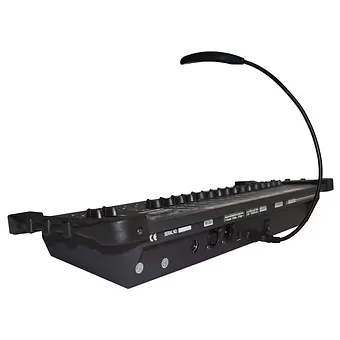
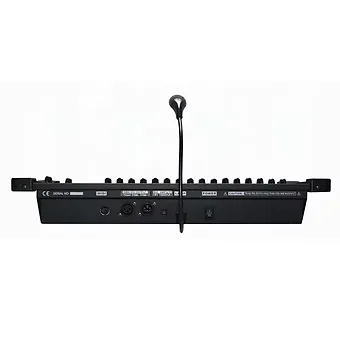
MIDI control covers banks, chases and blackout, so the desk can be driven from a sequencer or a foot controller when both hands are occupied. DMX in and out run on 3-pin XLR — the cable every band, venue and rental house already has in the case. Blackout is always one button away, which matters the second something goes wrong on stage.
One Desk or a Box of Four
Single units ship at $99. A BOX OF 4PCS at $389 brings the cost per desk down, which suits rental companies and multi-room venues that keep a controller on every stage. Both options are in stock, ship free across the USA and carry a 1-year warranty with a 30-day return policy.
WHO IT’S BUILT FOR
Mobile DJs
A wedding or party set repeats all season, so build the 240 scenes once and reuse them every weekend. Sixteen faders let you ride the master and pull a fixture down live, while music mode keeps the lights moving through the dinner hour when both hands are on the decks.
Bands and club installs
Twelve fixture positions cover a club's full lighting rig or a touring band's backline of lights from a single desk. Record the chase banks against the actual set list, then fire them from the stage or from MIDI on a sequencer track — no operator required.
Churches and volunteer teams
Auto mode and the built-in microphone let a volunteer run the service without learning DMX addressing first. Store the looks for worship, sermon and announcements in separate banks, and step through them in order. Fade time sliders keep the transitions gentle.
Rental companies and multi-room venues
One controller per stage is the practical model, which is what the BOX OF 4PCS at $389 is built for. The 3-pin XLR connection matches the cable stock you already send out, and the 1-year warranty keeps the fleet simple to support.
Indoor use only
The HEMERA DMX C384 is a control desk with a plastic end housing, built for booths, tables and racks in indoor venues. It carries no weather rating of its own, so keep it out of rain, sprinklers and open-air stages — for outdoor shows, run the controller from a covered position and choose IP-rated fixtures for the rig itself.
Where It Fits
Controllers keep small rigs manageable: DJ booths, small venues, churches, schools and rental racks — one desk patched, one show ready to run.
FREQUENTLY ASKED QUESTIONS
What does a 384-channel controller give me that a smaller desk does not?
Headroom. Twelve fixture positions at up to 32 channels each means moving heads, washes and effect lights all sit on the same desk instead of being split across two. With 240 scenes and 16 faders on top, you can store a whole set list and still keep hands-on control of the channels that matter during the show.
How many lights can I actually run from it?
Up to 12 intelligent lights, with up to 32 DMX channels available to each one — 384 channels in total. That covers a typical club rig or a band's full backline. If you run several stages or rooms, the BOX OF 4PCS at $389 is the cheaper way to put a controller on each.
Do I need a computer or lighting software to use it?
No. Everything is programmed on the desk itself: 30 banks of 8 scenes, 6 chase banks, 16 faders and the fade time and speed sliders. MIDI is there if you want to drive banks, chases and blackout from a sequencer, but it is an option, not a requirement.
What is the difference between a scene, a bank and a chase?
A scene is one static look. A bank holds 8 scenes — the C384 has 30 banks, so 240 scenes in total. A chase is a sequence that steps through up to 240 steps on its own, and there are 6 chase banks to record into, each with its own fade time and speed.
Can I use it outdoors?
No. The HEMERA DMX C384 is built for indoor control positions — booths, tables and equipment racks — and it carries no weather rating. For open-air events, keep the desk under cover and use IP-rated fixtures of your own for the rig.
I have never programmed lighting before. Is it manageable?
Yes. Auto mode steps through your stored scenes using the fade time sliders, and the built-in microphone lets the controller follow the music on its own. You can run a first show with nothing but a bank of scenes and one fader, then add chases as you get comfortable.
Will it hold up to weekend-after-weekend use?
The housing uses plastic end panels and the work light is an LED gooseneck lamp, which is a practical build for a desk that travels in a van rather than living in a rack. Every order includes free USA shipping on most products, a 1-year warranty and a 30-day return policy.



















Reviews