Main Features
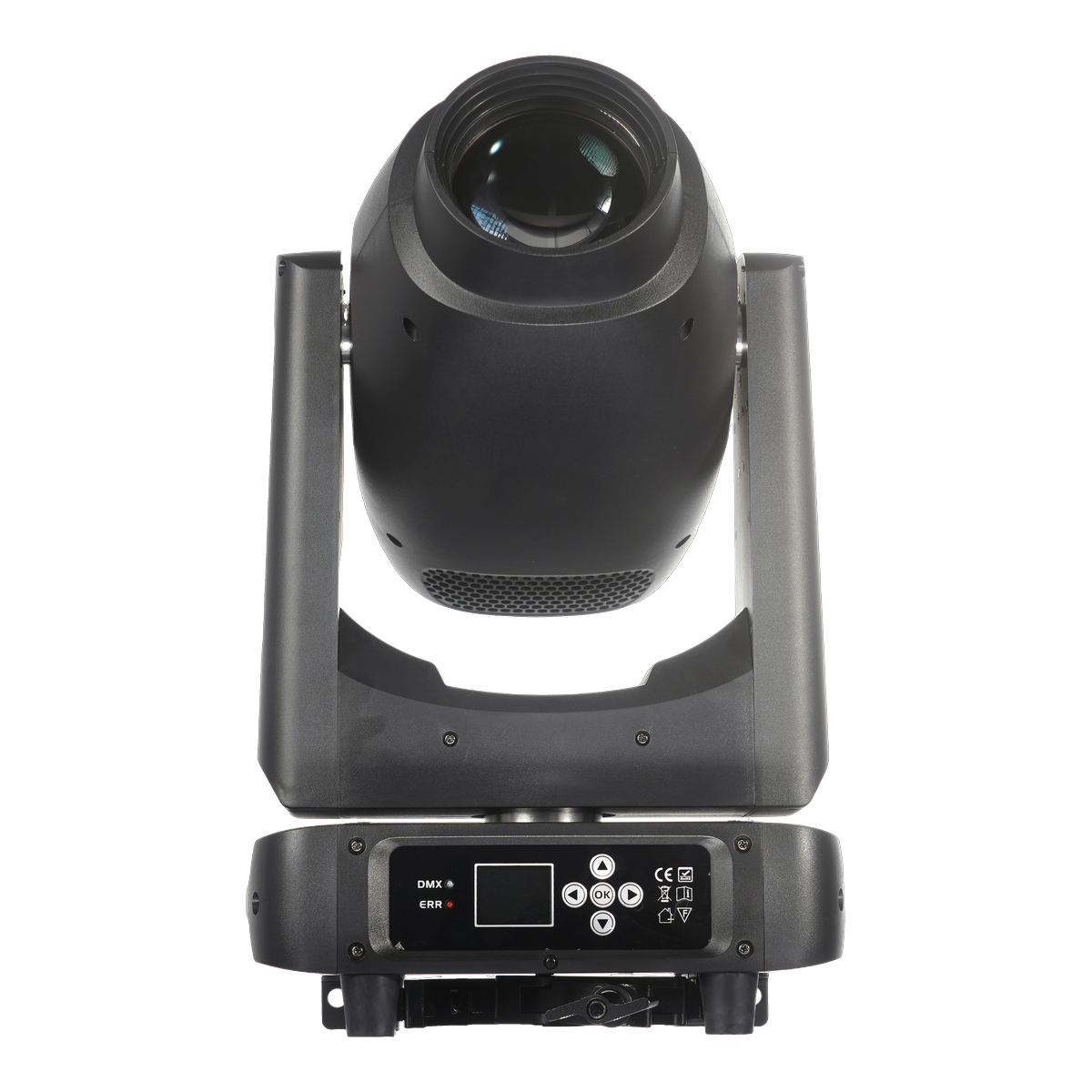
A 250W lamp hybrid beam with a 2° beam angle, 103,000 lux at 10 meters, an 8+16-facet rotating prism and a 19CH personality — two fixtures and a road case in one purchase, for the hard-edged aerial looks LED beams cannot produce.
A True 2° Pencil Beam
The beam angle is 2° — about as tight as a moving head gets. Out of the lens, 250W of lamp delivers 103,000 lux at 10 meters, which is why the beam stays solid and hard-edged all the way across a room instead of blooming into a cone. In a haze-filled club or a festival field, a 2° beam draws a defined line in the air: the effect the crowd actually reacts to. This is the category of fixture you hire when the brief says 'aerial beams', not 'wash the stage'.
Two Rotating Prisms, Layered On Top of Each Other
The fixture carries an 8-facet and a 16-facet layer on Prism1, plus a 16-facet rotating prism on Prism2. Turn them on and one beam becomes a fan of beams sweeping the room; stack them and you get the dense multi-layer look that normally needs two or three fixtures pointed at the same spot. For a chorus, a drop or a build, that is the fastest way to go from one hard beam to a wall of light without touching anything else.
13 Gobos, 14 Colors, Split Color and Frost
A 13-gobo static wheel handles pattern projection, and the 14-color wheel covers the palette plus open. Split color puts two colors in the beam at once for a two-tone look, the rainbow effect sweeps the full spectrum on one channel, and frost softens the hard 2° edge for moments when a full-beam blast is too much. Every one of those is a separate DMX channel, so you can move between them mid-song.
RGB Halo Ring Around the Beam
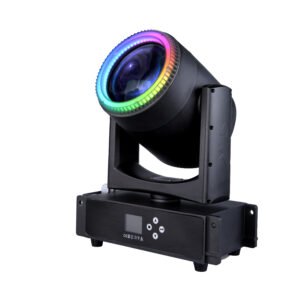
A ring of RGB sits around the main lens and runs independently of it. Keep the 2° beam white and hard on a performer while the halo holds a slow color bed, or drive both together for a single saturated statement. On a wedding, a corporate set or a church stage, the halo is what stops the fixture reading as purely aggressive — it gives the room ambience without giving up the beam.
19CH of DMX With 16-Bit Movement
19 channels cover pan, tilt, color, gobo, both prisms, frost, dimmer, strobe and the halo ring as separate parameters. Pan travels 540° and tilt 270°, both with 16-bit scanning, and Pan/Tilt is selectable as 8-bit or 16-bit smooth. 16-bit keeps a slow sweep clean rather than steppy; 8-bit frees channels when the universe is crowded. DMX, Master-Slave, Auto and Sound modes are all built in.
A Lamp Engine — and What That Means
The light source is a 250W lamp rated for 2,000 hours, not an LED array. Two things follow from that. First, the output: lamp beams deliver the hard 2° edge and the 103,000 lux at 10 meters that designers ask for by name. Second, it is a maintenance item — plan lamp replacements into the fixture's running costs rather than expecting a decade of service. The upside is a hard 2° lamp look that LED beams do not reproduce.
14.8 kg, Two to a Road Case
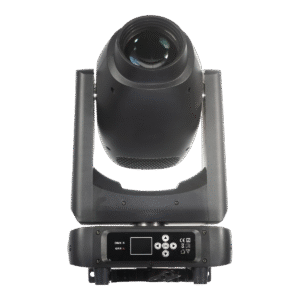
At 14.8 kg (32.63 lb) in a 340 × 257 × 505 mm (13.4 × 10.1 × 19.9 in) body, the fixture is compact enough for a small truss and heavy enough to need proper mounting. The 2PCS & 1 ROAD CASE package at $1,319 ships a matched pair already protected for transport, which matters if the rig travels — two beams either side of a stage is the standard aerial look, and this is that rig in one order.
WHO IT’S BUILT FOR
Nightclubs and bars
A 2° beam at 103,000 lux cuts through the haze of a packed room and draws aerial lines over the crowd, and the dual prism turns each fixture into a fan during the peak of the night. Mount the pair either side of the booth or on the ceiling and let the 16-bit pan and tilt do slow, deliberate sweeps between tracks — on a dance floor, that movement is most of the show.
Mobile DJs and wedding professionals
The RGB halo ring is the reason this fixture works at a wedding as well as a club: the beam stays white and clean on the first dance while the halo keeps the room colored. 13 gobos give you pattern projection for a monogram or a feature wall, frost softens the edge when the room is small, and the road case means the pair travels protected rather than rattling in the car.
Bands, touring acts and rental houses
19CH per fixture is enough to keep every effect on its own fader, so a lighting operator can busk a set without menu-diving. The 2PCS & 1 ROAD CASE package is how hire stock is actually bought — a matched pair that goes out on the truck as one item. Budget for lamp replacement against the 2,000-hour rating as part of the rental calculation.
Churches, theatres and corporate events
Frost softens the hard 2° edge so the beam can be used over a person without it reading as aggressive, and the 14-color wheel with split color covers everything from a clean warm wash of movement to a full rainbow sweep for a celebration. Master-Slave and Auto modes let a volunteer operate the pair without a console, and the integrated clamp makes truss mounting fast on a one-off setup.
Indoor use only
The JUBARIS BEAM 300 carries an IP20 rating and is built for clubs, bars, theatres, churches and other covered indoor venues. It is not weather-sealed, so for outdoor or weather-exposed events choose an IP65-rated fixture from our outdoor range instead — for example the JUBARIS BEAM 380IP.
FREQUENTLY ASKED QUESTIONS
What makes the JUBARIS BEAM 300 different from an LED beam?
The edge and the output. It runs a 250W lamp through a 2° beam angle to give 103,000 lux at 10 meters, which produces a hard, defined line in haze that LED beams at this price cannot match. On top of that it carries an 8-facet plus 16-facet prism layer on Prism1 and a separate 16-facet rotating prism on Prism2, so you can stack two prism effects on one beam instead of using three fixtures to get the same density.
How many JUBARIS BEAM 300 fixtures do I need?
Two — and that is exactly how it is sold. The package is 2PCS & 1 ROAD CASE at $1,319, which puts one aerial beam each side of a stage or a dance floor, the standard look for a club or a band. For a wider stage or a festival position, four gives you crossing beams overhead, and because each fixture carries 13 gobos and 14 colors you are adding fixtures for coverage, not for effects.
Do I need a DMX controller to run it?
No. DMX, Master-Slave, Auto and Sound modes are built in, so the pair can run on its own once powered. Adding a console is what unlocks the full 19CH map — separate control of the 8+16-facet prism, the second prism, frost, split color, the rainbow effect and the RGB halo ring, plus 16-bit pan and tilt for smooth movement.
How does the dual prism work, and why does it matter?
Prism1 holds an 8-facet and a 16-facet layer; Prism2 is a separate 16-facet rotating prism. Either can be rotated, and using both together multiplies one hard 2° beam into a dense, layered fan. That is the effect that fills a room during a chorus or a drop — and because they are on separate DMX channels, you can bring the second prism in on the beat rather than committing to it for the whole show.
Can I use it outdoors?
No. The JUBARIS BEAM 300 is IP20-rated for indoor use — clubs, bars, theatres, churches and covered venues. It is not weather-sealed, so for outdoor or weather-exposed events choose an IP65-rated fixture from our outdoor range instead; the JUBARIS BEAM 380IP is the same beam concept with an IP65 body.
How is it powered, what is the lamp life, and how does it ship?
Power is AC100–240V at 50/60Hz with a 320W draw and a 6.3A fuse, so the same fixture works on US and EU mains. DMX uses 5-pin XLR input/output with 3-pin available, and power uses a Tru1 input with PowerCon available. The lamp is rated for 2,000 hours, so treat it as a scheduled replacement rather than a lifetime part. The pair ships in a road case, with free shipping on most products across the USA, a 1-year warranty and a 30-day return policy.
Will it hold up to regular weekend shows?
The fixture is built for repeat load-ins: an integrated clamp for fast truss mounting, a 14.8 kg (32.63 lb) body, and a road case included in the package so the pair travels protected. The one consumable to plan for is the lamp at 2,000 hours — exactly the same way you would plan lamp costs on any 250W beam. The 1-year warranty covers the fixture itself.



















Reviews