
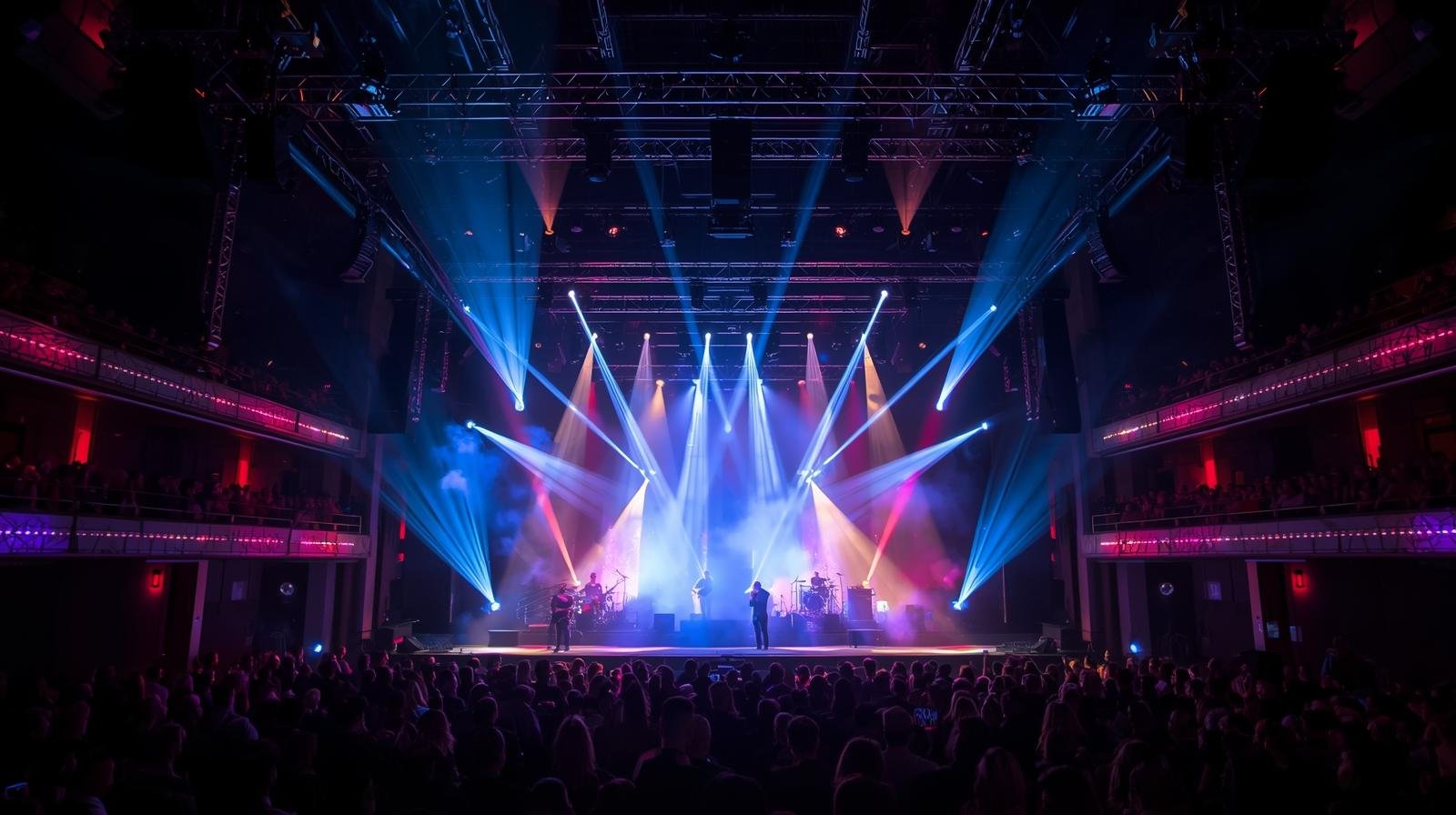
A stage can look impressive on paper. Wide platform. Solid sound system. Skilled performers. Yet something often feels flat once the show begins. The reason is rarely obvious at first glance, but it usually sits above eye level. Light kinds shape how movement is perceived, how depth appears, and how energy travels across a space. Choosing them is less about preference and more about understanding how different systems behave under pressure, heat, motion, and timing.
Some lighting setups impress in photos and fail during live cues. Others look modest until the first beat drops. That contrast matters.
Stage environments are unforgiving. Heat builds quickly. Angles shift. Power loads fluctuate. Not all light kinds respond well to these conditions, even when their specifications suggest otherwise.
It appears many buyers focus on brightness alone. Lumens matter, yes, but beam control, color consistency, response speed, and fixture reliability often matter more. Especially in live shows where cues are stacked tightly.
Manufacturers publish impressive numbers. Real stages expose weaknesses.
Some light kinds lose color accuracy after extended use due to heat or poor driver design. Others drift slightly in pan and tilt alignment. These details rarely appear in marketing material, yet they affect every performance.
Stage lighting is often explained in neat categories. Reality is messier.
Spot, Beam, and Wash Lights Compared
| Light Category | Primary Purpose | Where It Excels | Common Limitations |
| Spot Lights | Focused projection | Logos, gobos, precision effects | Limited coverage |
| Beam Lights | Narrow, intense shafts | Concerts, aerial effects | Less ambient fill |
| Wash Lights | Broad color coverage | Background, mood setting | Lower visual punch |
Different types of stage lights are rarely used alone. Effective stage lighting depends on how these categories interact rather than compete.
Wash lighting often gets treated as secondary.
A well-chosen LED wash moving head can redefine depth on stage. Movement adds life. Static washes tend to flatten scenes, especially in large venues.
Types of Wash Lights for Stages Worth Considering
Each option serves a different rhythm. Faster shows the benefit from motion. Theatrical productions may prefer stability.
An LED bar light rarely draws attention by itself. That is its strength.
Placed along truss lines or stage edges, these fixtures define boundaries and create visual continuity. Poor placement, however, creates glare or uneven gradients.
Many lighting plans fail because linear fixtures are treated as fillers rather than functional design elements.
Movement attracts the human eye instinctively. That does not mean more movement equals better results.
LED wash moving head units, when overused, exhaust viewers. Strategic restraint creates contrast. Slow sweeps between high-energy moments often land harder than constant motion.
Light kinds that allow fine motor control offer better long-term flexibility, though most modern moving heads allow both preset and manual overrides.
DJ and concert lighting is built for immediate impact, rapid color shifts, powerful beams, and effects that cut cleanly through haze. A well-designed DJ light setup can enhance the energy of any performance, creating dynamic visuals that match the music’s intensity. On the other hand, corporate stages often call for a subtler approach: crisp whites, natural skin tones, and silent operation. Problems arise when one setting copies the other without thought. Professional lighting should follow audience expectations rather than trends alone.
LED technology dominates modern stage lighting, and high-quality fixtures can last tens of thousands of hours if managed properly.
| Factor | Impact on Performance | Often Overlooked |
| Heat dissipation | Color stability | Yes |
| Power regulation | Component lifespan | Yes |
| Firmware updates | Cue accuracy | Frequently |
Professional LED lighting solutions differ less in brightness and more in how they manage these variables over time.
A compact club does not need the same lighting as an outdoor festival.
Low ceilings punish narrow beams. Wide washes bounce unpredictably. High trusses expose weak optics immediately.
Stage lighting plans should start with measurements, not catalogs.
High-output fixtures sometimes sacrifice color accuracy, particularly in budget or lower-quality units. On camera, this becomes noticeable quickly.
It’s tempting to ignore CRI values, especially for concerts. Yet modern audiences record everything. Poor color rendering travels online long after the show ends.
Light kinds that balance output with fidelity age better in public memory.
Lighting performs best when treated as a complete system. Combining unrelated fixtures can create subtle problems like timing lag, uneven colors, and control issues. Professional setups are stronger when designed with cohesion in mind, even if they’re assembled over time.
With over two decades of experience in professional stage lighting and a global distribution network, Sanyi Lights designs its product ranges to integrate seamlessly rather than conflict. For buyers seeking consistency across types of lights such as beam, wash, and linear fixtures, these platforms offer reliable performance while preserving creative flexibility.
Trust Sanyi Lights to unify your stage setup—consistent, versatile fixtures that keep your creativity in full swing.
Audiences rarely compliment lighting directly. Yet they feel it. Movement appears sharper. Transition land cleaner. Performers seem more confident.
Light kinds do not steal the show. They guide it, subtly, almost invisibly. And when chosen with restraint, context, and technical understanding, they leave behind something more durable than brightness a memory that lingers, even when the stage goes dark.
Light kinds refer to categories of lighting fixtures based on function, including beam, wash, spot, linear, followspot, flood, and cyc lights.
Most stages benefit from at least three complementary light kinds to balance focus, movement, and ambient coverage.
Generally, yes, though heat management, driver quality, and color accuracy vary by design and manufacturer.
No. Wash lights support mood and coverage, while beam lights create emphasis and visual impact.
It can be. Smaller stages often reveal lighting flaws faster due to proximity and ceiling constraints.

