
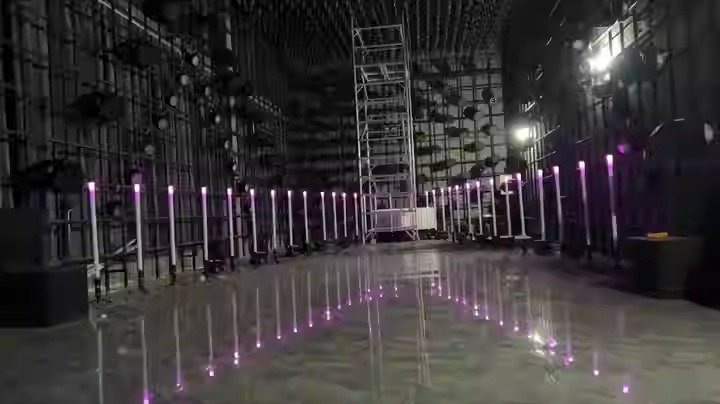
A lighting rig rarely fails because the fixtures are weak. More often, it fails because the equipment does not match the job. Walk into enough venues, and a pattern appears. Oversized beams fight low ceilings, wash lights often lack real color depth, and control systems can intimidate operators into using only three presets all night.
Choosing stage lighting equipment is less about chasing specifications and more about aligning tools with intent. That alignment takes judgment, not just a catalog.
Lighting defines how an audience reads space, movement, and timing. Sound can be excellent and performers fully rehearsed, yet poor lighting decisions flatten everything. It may be brightness, but more often it’s control, placement, and restraint.
Stage lighting equipment should support the experience without drawing attention to itself. When the gear fits the environment, nobody talks about it. They remember the show.
Not all events ask the same questions of light.
Concert lighting leans toward motion, contrast, and rhythm. Moving heads, beams, and fast color changes tend to dominate. That said, not every concert needs maximum intensity. Smaller venues often benefit from fewer fixtures with smarter programming rather than raw output.
Theatre asks for consistency and color accuracy. Smooth fades, predictable beam shapes, and quiet operation matter more than speed. Event lighting equipment originally designed for clubs can work in theatre, but only if dimming curves and optics are suitable.
Clarity comes first. Faces must read clearly on camera and in the room. Lighting should feel intentional but restrained. An LED stage lighting system with balanced color temperature usually performs better than mixed legacy fixtures.
Scale changes everything, making weather resistance, throw distance, and redundancy critical. Power distribution and control distance also matter more than in fixed venues.
Lighting rarely exists in isolation from architecture.
Low ceilings limit beam angles and fixture placement, while tight rooms challenge narrow beams and aggressive movement. In contrast, large halls absorb light quickly and demand output that smaller fixtures simply cannot provide.
Many venues advertise available power, but actual capacity may fall short; older buildings may struggle with modern electrical loads. Stage lighting installation should account for existing circuits, not theoretical capacity.
Some spaces allow truss and flown rigs, while others do not. Floor-mounted solutions, including LED Bar Light fixtures used creatively, often solve problems that overhead rigs cannot.
Not all fixtures do the same work, even when they look similar on paper.
These provide base color and visibility. Modern LED versions offer flexibility and efficiency, though not all color engines behave equally. Skin tones tend to reveal weaknesses quickly.
Spots, washes, and beams bring motion and focus. Beams excel in haze-filled environments. Spots handle gobos and texture. Wash movers fill space evenly when static fixtures fall short.
Strobes, pixel bars, and blinders add punctuation. Used sparingly, they elevate moments. Used constantly, they exhaust the audience.
Fixtures are only as useful as the system controlling them.
DMX remains the standard language. Addressing errors remains one of the most common causes of pre-show panic. A reliable DMX Controller, properly configured, saves hours of troubleshooting.
Hardware consoles offer tactile confidence, while software provides flexibility and cost efficiency. The choice often comes down to operator comfort rather than feature lists.
Not all fixtures interpret DMX in the same way. Channel modes vary. Documentation quality matters more than many buyers expect.
Budget conversations often focus on quantity. That approach rarely holds up.
Prioritize versatility. A small number of reliable wash fixtures and a basic controller outperform a cluttered rig of mismatched gear.
This tier allows balance. A mix of washes, movers, and effects becomes realistic. Control upgrades often deliver the biggest improvement here.
At this level, consistency and serviceability matter more than novelty. Replacement parts, firmware support, and manufacturer reliability become real cost factors.
Stage lighting equipment that grows with your needs can often cost less over time.
Lighting failures are rarely subtle.
Fixtures, clamps, cables, and trusses must all be rated appropriately. Cutting corners here creates liability that no visual payoff justifies.
LED fixtures run cooler than legacy lamps, but they still generate heat. Poor airflow shortens lifespan and causes unpredictable behavior mid-show.
Good systems fail without good habits.
Addressing, power, and signal integrity are basics that catch most issues early.
Cable paths, fixture order, and labeling reduce setup time and mistakes; even experienced crews benefit from written plans.
Traditional discharge fixtures still deliver punch, but maintenance costs remain high. LED systems generally offer efficiency and color flexibility, though in some scenarios, traditional lights still outperform them in output or beam quality. Comparing feature sets without considering the application often leads to disappointment.
A compact rig using LED washes, a few moving spots, and a simple DMX Controller covers most needs. In small venues, control simplicity often outweighs fixture count.
Distributed truss, layered washes, beams for aerial effects, and redundant control paths define reliability. Event lighting equipment here becomes a system, not individual products.
Buying more fixtures instead of focusing on control remains a common mistake. Another is ignoring ease of use. Complex systems often get simplified on show day anyway.
Reliable stage lighting equipment depends on more than specs. Manufacturers with long-term support, consistent components, and documented control profiles reduce operational risk. Companies like Sanyi Lights, with experience across concerts, installations, and large-scale events, tend to focus on system compatibility rather than isolated products.
If you are planning a new rig or expanding an existing one, reviewing complete lighting solutions rather than individual fixtures usually leads to better results.
Explore Sanyi Lights’ full-stage solutions today and see how the right system can simplify setup, improve control, and elevate every performance.
Choosing stage lighting equipment is part technical, part judgment, and part restraint. The right setup rarely looks impressive on paper, yet it performs effortlessly when it matters. If you are evaluating options now, take time to map intent to the environment before committing to hardware.
It refers to fixtures, control systems, and accessories used to illuminate performances and events.
It sends control signals to lighting fixtures, managing intensity, color, and movement.
Often yes for efficiency and flexibility, though application and color quality still matter.
Usually less than expected. Placement and control matter more than quantity.
Safety, compatibility, and ease of operation over time.

