
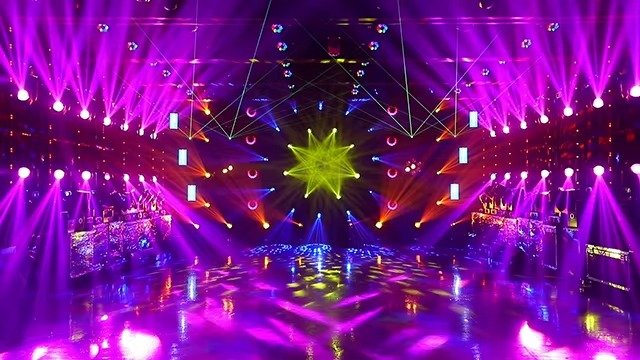
Walk into any venue before doors open. The stage is quiet, half-lit, cables taped down, fixtures already hung. At that moment, lighting decisions are mostly finished. Those decisions matter more than many people realize.
The question of the best stage lighting rarely has a single answer. It depends on scale, purpose, audience, and even how long the lights will run without a break. Concerts, corporate presentations, worship services, and theatrical productions ask very different things from the same space. Understanding those differences is where good lighting design usually begins.
Clients often want certainty. Clients often seek a single setup or recommendation. Yet lighting is situational. What works beautifully for a touring band may fall flat in a conference hall or overwhelm a small venue. The goal is not chasing trends. It is choosing tools that fit the job without fighting the room.
Before fixtures, wattage, or control protocols enter the conversation, it helps to define what “best” actually refers to.
Some shows prioritize clarity. Faces must read clearly from the back row. Others value mood, texture, shadow, and contrast. Best stage lighting may lean bright and neutral or deliberately uneven and dramatic.
Traditional lamps still have their place, but LED stage lighting has shifted expectations. Lower power draw, less heat on performers, longer service life. None of this guarantees better design, but it does affect long-term costs and reliability.
Lighting for people and lighting for sensors are not the same thing. Broadcast work introduces constraints that live audiences never notice. Flicker, color accuracy, and exposure consistency suddenly matter more.
No stage relies on one type of light. Balance matters.
Front light defines faces and form. It is functional, often understated, and easy to take for granted. When done poorly, it flattens performers. When done well, it disappears.
Backlight creates separation from the background. It adds depth and dimension, especially in concert settings. Many designers rely heavily on it, sometimes more than audiences realize.
Dance and theater benefit from side angles. Musculature, movement, and texture read differently when light comes from the wings instead of the house.
Strobes, lasers, and floor stage lights fall into this category. They energize moments but lose impact if overused. Restraint often produces stronger results.
Concert environments reward flexibility. The tempo changes, and the energy rises and falls.
A Moving Head offers speed, precision, and adaptability. A moving head offers beam shaping, gobos, and color changes, and one fixture can handle multiple roles throughout a set. For many tours, this versatility makes moving heads central to the best stage lighting approach.
LED Wall Washer units and wide-angle washes provide coverage without harsh edges. They are often used to build color layers behind performers, creating depth rather than spotlighting.
Used sparingly, strobes punctuate climactic moments, but overuse quickly becomes distracting or fatiguing. Experienced designers treat them as punctuation, not paragraphs.
Theater lighting plays a longer game. Subtlety matters more than spectacle.
These fixtures offer precise beam control and soft edges. Ellipsoidals handle focus and shaping. Fresnels provide gentle washes with adjustable spread. Fresnels and ellipsoidals remain staples despite the growth of LED alternatives.
Theatrical lighting values repeatability. Cues must land exactly the same way night after night. LED PAR Light options have improved, though some designers remain cautious depending on color rendering requirements.
Scale changes everything.
Large spaces demand fixtures with higher output and tighter beam angles, whereas small rooms benefit from restraint. Too much power in a club overwhelms performers and blinds audiences.
A compact venue may run a simple DMX setup. Arenas rely on layered control systems, backup paths, and preprogrammed scenes. At a large scale, the effectiveness of stage lighting depends as much on infrastructure as on the fixtures themselves.
Color influences perception more than brightness alone.
Warm light feels intimate. Cool light suggests distance or tension. Saturated colors amplify emotion but reduce visibility. Designers often balance neutral front light with colored back or side light.
Not all colors treat performers equally. Some fabrics absorb light, while others reflect it harshly. In practice, testing often matters more than theoretical calculations.
Cameras introduce complications.
LED stage lighting must handle camera frame rates cleanly. Poor PWM settings create rolling flicker on the screen. Audiences in the venue may never notice these issues, but they become apparent on broadcast feeds.
Broadcast lighting favors consistency over drama. Color temperatures are often standardized to avoid grading issues later. Lighting that works best for cameras often appears plain in person. However, it translates cleanly on screen.
Fixtures are only as good as the control behind them.
Modern consoles allow layered programming, timecode syncing, and remote access. Smaller systems still rely on straightforward DMX control, and the choice of system depends on complexity rather than prestige.
New features are tempting. Stable systems win tours. Reliable systems are essential, as downtime costs more than using outdated interfaces.
Budget inevitably shapes decisions, whether it is explicitly acknowledged or not.
Entry-level fixtures serve fixed installations and occasional events well. Mid-range equipment balances durability with performance. High-end gear performs best in demanding environments, but it requires trained operators and regular maintenance.
Rental houses often bridge the gap, offering access to premium tools without ownership costs. For many users, that tradeoff makes sense.
Manufacturers that focus on professional applications tend to design with durability and serviceability in mind. Companies like Sanyi Lights focus on this reality. They supply a wide range of moving heads, LED PAR Light units, LED Wall Washer systems, and floor stage lights designed for repeated use rather than short-term novelty. For venues or production teams building long-term inventories, that distinction can matter, so reviewing complete fixture specs and support availability is usually time well spent.
Upgrade your stage—shop Sanyi Lights now and light every performance flawlessly.
The best stage lighting is rarely about one fixture or brand. It is about intent, balance, and understanding what the space and audience actually need. Trends shift. Technologies evolve. The fundamentals stay stubbornly consistent.
If you are planning a new installation or upgrading existing gear, start by defining the job clearly before chasing equipment. And when uncertainty creeps in, consulting experienced lighting suppliers early often prevents expensive course corrections later.
Some decisions seem obvious under full work lights, while others only reveal themselves when the house goes dark.
Yes, though output and beam control must match the room size to avoid glare and discomfort.
Often, but not universally. LEDs excel in efficiency and control, while some traditional fixtures still offer superior color rendering.
They can, provided beam angles and brightness are appropriate for the space.
Not always. They add texture and depth but should support, not dominate, the design.
It depends on usage and maintenance. Well-built fixtures can last many years when maintained according to manufacturer guidelines.
If you want to explore how modern stage lighting systems are configured for different venues, reviewing current professional product ranges can clarify what is realistically achievable within your constraints.

