
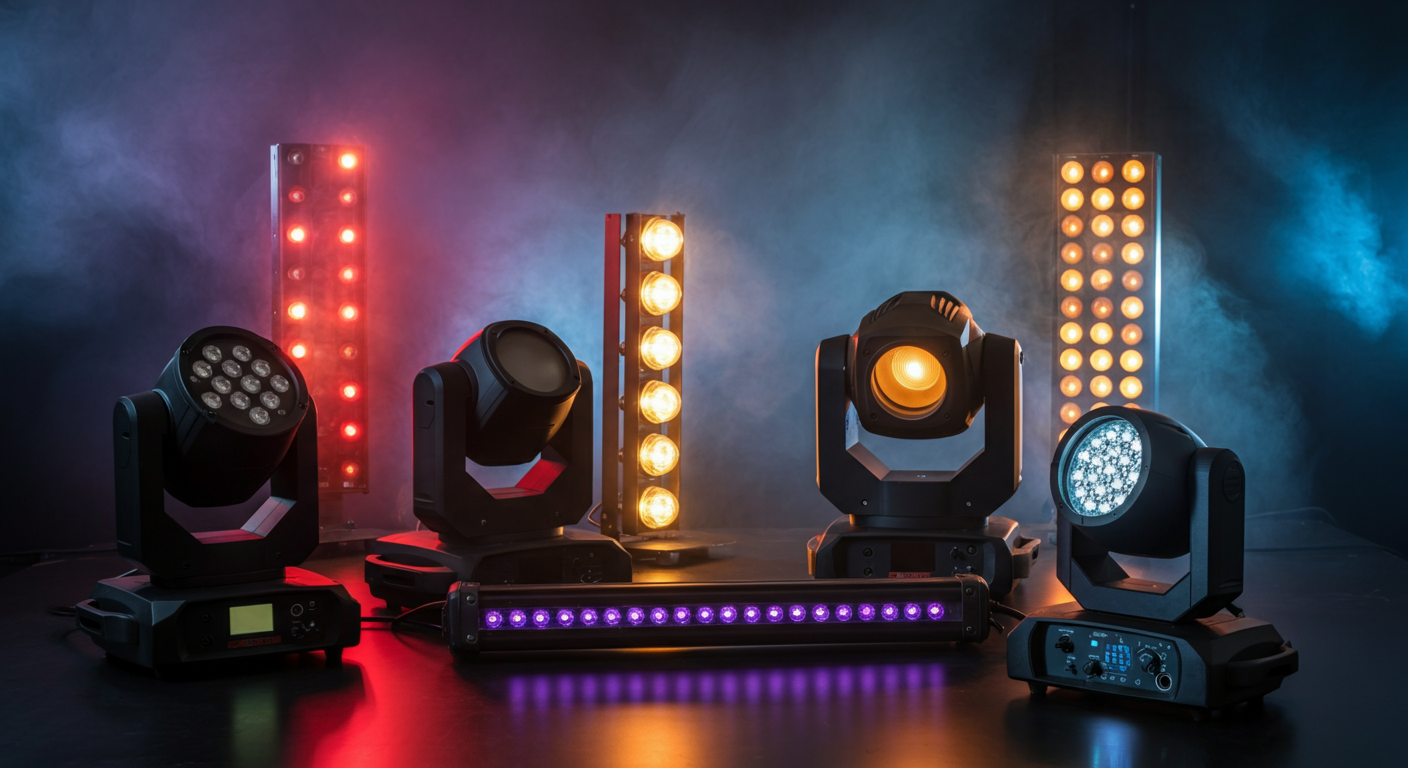
Some people notice sound first. Others feel the room before a single track drops. Lighting sits between those two worlds, and beginners often underestimate how much it shapes a set. A simple fixture can soften a crowded room, or a moving beam can cut through the space like a blade. When used well, DJ lighting can lift even an ordinary playlist into something that feels intentional. Many new DJs learn this the moment they watch the crowd react to the first sweep of colour across the floor.
Look at any small club. A basic rig still controls mood more than décor ever will. The brighter the wash, the more open the space feels. Dim the room, and everything grows intimate. New DJs often focus on controllers, software, or the next effect plug-in, but lighting carries weight in ways that are harder to describe until you see it in action. This may be why professionals place lighting almost on the same level as audio. It influences the audience before the first bass line.
Most beginners start with a mix of fixtures without knowing why. It helps to understand how each category works.
Broad swaths of colour fill the room. These lights create the base layer. A wash light can smooth out harsh corners or give the stage a visual signature. Even low-powered units help new DJs create cohesion before moving to advanced tools.
These shape direction. One sharp beam draws attention immediately. Beginners often rely on automated programs, although custom scenes tend to look cleaner. Beam fixtures appear in almost every professional rig because they carve motion into the air.
Patterns, spins, colour rolls, and music reactive flashes. Sometimes chaotic, sometimes elegant. The trick is moderation. Too many effects at once, and everything becomes noise. One or two well timed bursts feel far more sophisticated.
Crowds respond to alignment. A kick drum matched with a sudden burst of white light can feel physical. Smooth house tracks often look better with slow colour fades instead of strobing chaos. Many newcomers overlook this relationship, although it becomes obvious once you start experimenting. Some DJs even design lighting cues in advance, treating the room like a canvas.
There is no single perfect combination. Even so, certain pieces appear again and again because they simply work.
This setup fits weddings, clubs, private parties, and small venues. Simple to transport, simple to mount, yet flexible enough for growth. It also keeps cabling and preparation manageable for those still learning.
Software control gives more precision, but hardware consoles feel reliable in busy environments. Some DJs prefer hybrid systems that combine both. What matters most is comfort. A controller you barely understand rarely helps during a live performance. New users should begin with simple scenes, then gradually build more complex cue stacks.
Placement changes everything. Even inexpensive dj lighting looks impressive with thoughtful angles. A few suggestions appear below, although experimentation is always encouraged.
Small adjustments dramatically improve professionalism, especially for events where atmosphere matters more than spectacle.
| Lighting Goal | Suggested Fixture Type | Notes |
| Add colour to a dull room | Wash lights | Works even in bright venues |
| Create movement and energy | Beam or moving head | Keep programming simple at first |
| Highlight the DJ booth | Spot fixture | Helps define performance space |
| Add occasional excitement | Effect light | Use sparingly for impact |
| Improve stage clarity | Wash bars | Useful for stage lighting installation needs |
Light overload appears at the top of the list. Many beginners turn on every fixture at full intensity, thinking more equals better. The opposite happens. Subtlety tends to look far more controlled. Another common issue is ignoring cable management. A tidy rig communicates professionalism. Lastly, relying entirely on built-in auto programs may feel convenient, but controlled scenes usually deliver smoother results.
Integrating Lighting With Stage Setups: Tips for Effective Stage Lighting Installation
When performing at events where other equipment exists, coordination becomes essential. Stage lighting installation professionals often space fixtures for even distribution. DJs controlling their own rigs may need to adapt to those layouts. It may help to study how venues place their lights, since repetition gradually trains the eye. Understanding how a stage breathes increases confidence when deciding where your own fixtures belong.
Wondering where to find fixtures that balance reliability with creative control?
Sanyi Lights offer accessible options for small and mid-sized setups. The appeal appears to come from straightforward operation and hardware that can handle regular transport without constant repair. It is simply an option worth exploring when assembling a dependable DJ lighting kit, particularly for performers who work across varied event types.
Explore Sanyi Lights Today and Build a Lighting Kit That Works as Hard as You Do!
Colour shifts that feel off. Fixtures drifting out of alignment. Cables introduce noise. These issues appear frequently, especially in event lighting setups where equipment is moved often. Most beginners solve half their problems by labelling all cables, securing power separately from data lines, and resetting fixtures before transport. Dust also affects sensors and fans more than many expect. A quick clean before each event prevents overheating and movement errors.
After a few shows, you start noticing how people respond not only to music but to space itself. Lighting slowly becomes part of your identity as a performer. Once you learn how each fixture behaves and how colour influences mood, your sets begin to feel more intentional. And that is when everything starts to shift.
When building a new rig, check out Sanyi Lights’ reliable collections and focus on how each fixture performs in practice not just on the specs.
A wash fixture helps create a base layer of colour and usually works in any environment.
Not required, although even one or two adds noticeable motion to a set.
Yes, though manual scenes often look more controlled.
Most beginner rigs run comfortably on standard outlets, but checking fixture ratings is recommended.
No, although understanding basic positioning and spacing improves overall results.

